Life at depth over 10,000 meters: breakthrough genomic study reveals population dynamics and adaptation to the extreme hadal environments
Life at depth over 10,000 meters: breakthrough genomic study reveals population dynamics and adaptation to the extreme hadal environments
Recently, a research, titled “The amphipod genome reveals population dynamics and adaptations to hadal environment”, was published in the journal Cell. For the first time, the study uncovered the population dynamics of an invertebrate species inhabiting depths beyond 10,000 m and revealed the molecular and genetic mechanisms underlying its remarkable adaptations to the extreme hadal environment.
The breakthrough work in understanding how life adapts to the deepest parts of the ocean was achieved by a research team led by Professor Haibin Zhang from the Institute of Deep-sea Science and Engineering, Chinese Academy of Sciences, in collaboration with BGI Life Sciences and other partners. This landmark achievement is the result of nearly a decade of dedicated exploration and research, supported by Global Trench Exploration and Dive Programme (Global TREnD) deployed and implemented by the Chinese Academy of Sciences.
The hadal zone, one of the extreme ecosystems on planet, is the deepest areas of the ocean with depths ranging from 6,000–11,000 m. The hadal environment is characterized by high hydrostatic pressure, limited food supply, complete darkness,
and near freezing temperatures. Despite these challenging conditions, diverse macrofaunal taxa survive and thrive in hadal trenches. Among the most successful colonizers in hadal environments, Amphipoda (malacostracan crustaceans) thrives with an extremely high population density in global trenches, and extends to depths exceeding 10,000 m, making it a representative group of the hadal ecosystem.
More than a dozen populations of the hadal amphipod Hirondellea gigas were collected during multiple expeditions to the Mariana Trench, the Yap Trench, and the West Philippine Basin, through the scientific RV Tansuoyihao and China’s independently developed full-ocean-depth manned submersible Fendouzhe, as well as full-ocean-depth landers including Yuanwei shiyan and Tianya. By integrating multi-omics analysis, the study provides new insights into the genetic adaptations and population dynamics of this remarkable hadal species.
The “deepest” animal genome
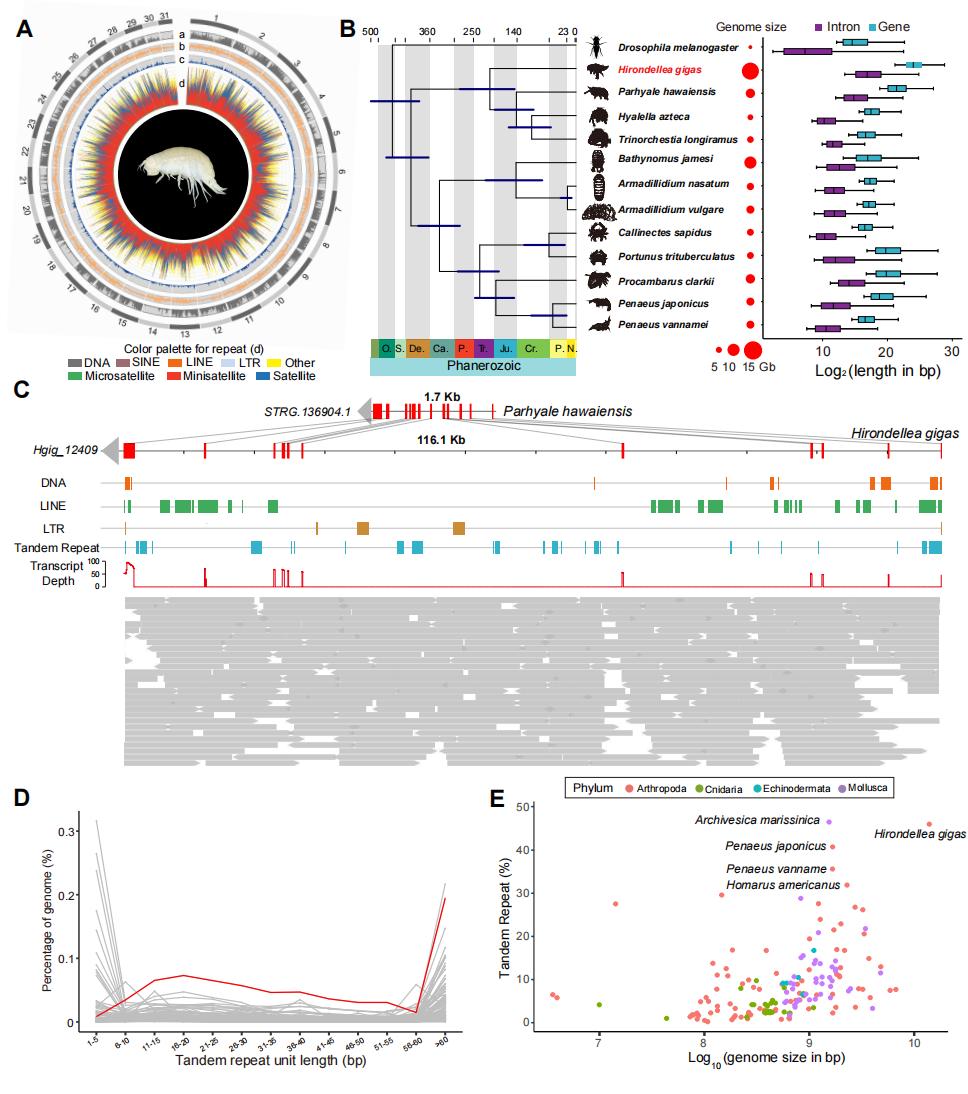
The study provides a first high-quality, chromosome-level genome assembly of H. gigas, with a total size of 13.92 gigabases (Gb). This assembly presents one of the largest among invertebrates, and the deepest animal genome reported to date. The genome is highly enriched in repetitive elements, accounting for ~72% of its content, with tandem repeats accounting for 46.03%, significantly higher than in most invertebrates. Such genomic architecture may influence gene regulation and contribute to resilience in the extreme hadal environments.
Free migration within trenches and genetic divergence between trenches
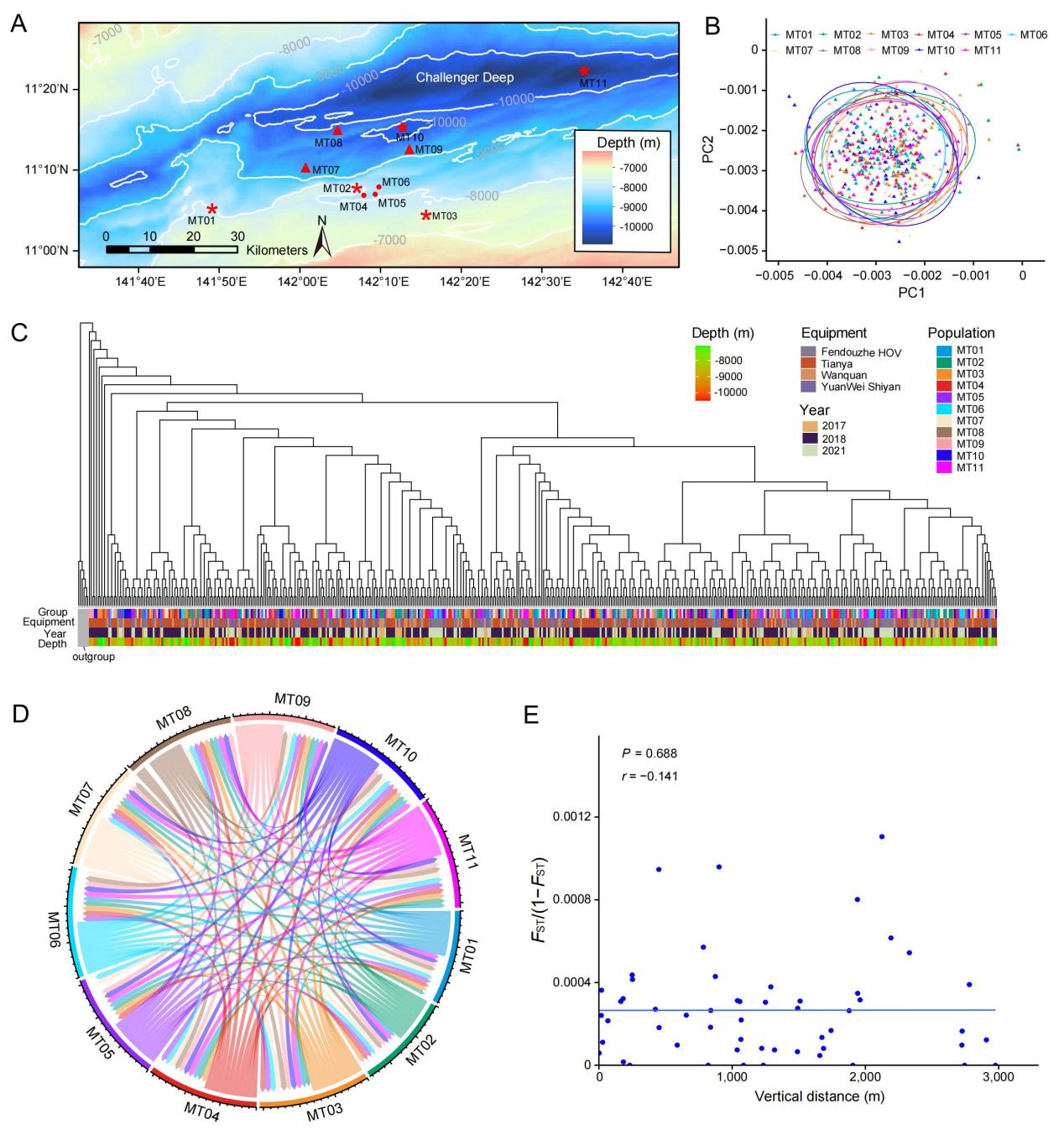
Whole genome resequencing of 510 H. gigas individuals sampled from 11 locations of the Mariana Trench, revealed striking genetic homogeneity across depths (~7000- 11,000 m), samplings years and locations. This suggest that these amphipods migrate freely across depths within the trench, possibly reflecting the population’s capacity to intrinsically cope with a wide range of high hydrostatic pressure. In contrast, comparisons among populations from the Mariana Trench, the Yap Trench (94 individuals form one location) and the West Philippine Basin (18 individuals from one location) demonstrated geographic structuring. Distinct genetic divergence was observed among populations between the Mariana Trench and the one from the West Philippine Basin, approximately 1,500 kilometers apart. These findings suggest that while vertical migration occurs within a single trench, horizontal dispersal and gene flow among different hadal features is constrained by geographic isolation.
Climate change may influence the demographic history of hadal amphipods
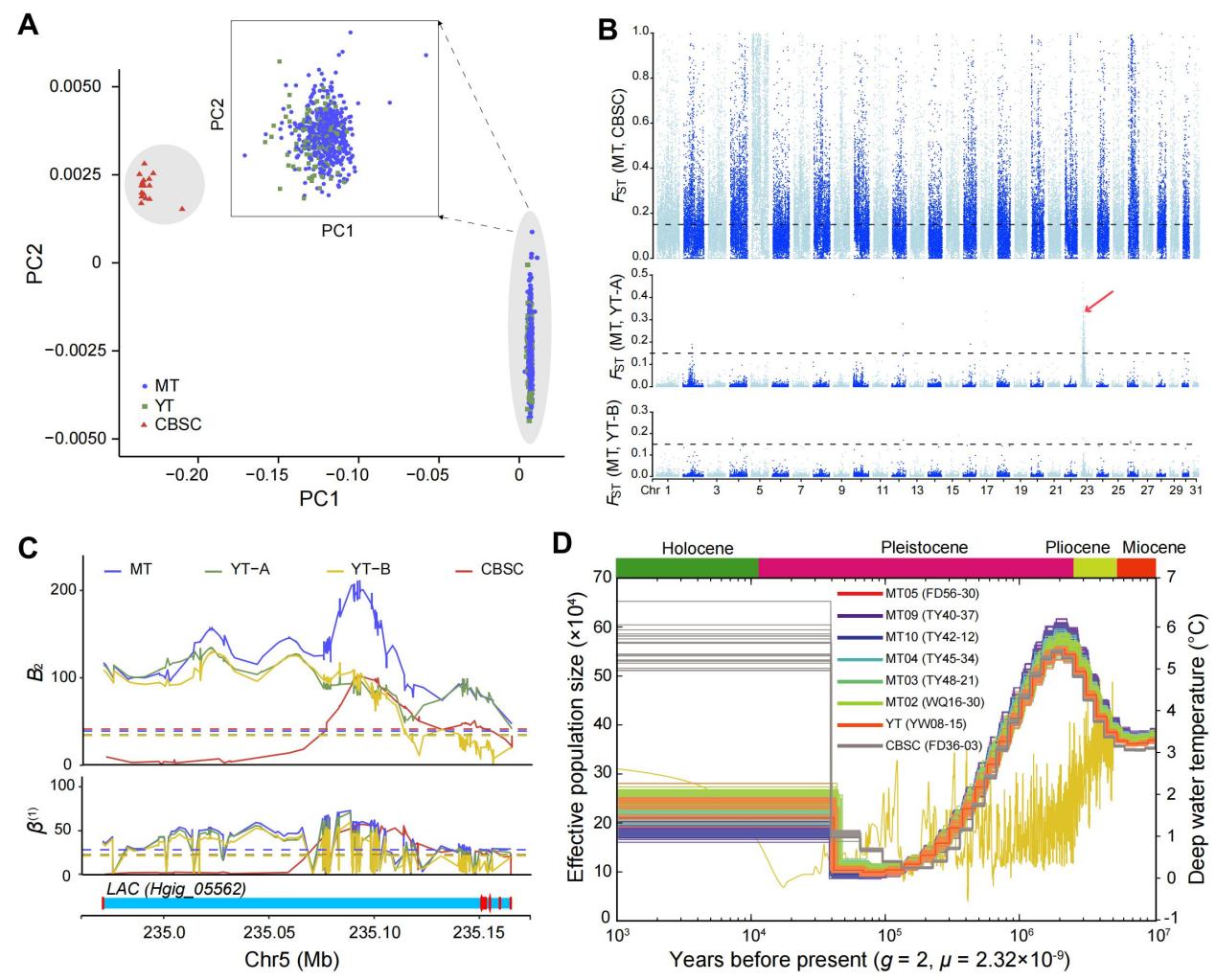
The historical demographic analysis revealed that H. gigas experienced a sharp population decline at around a few million years ago, followed by expansion and recovery, coinciding with major deep-sea temperature fluctuations during the Pleistocene. This highlights the profound impact of glacial–interglacial climate cycles not only on terrestrial ecosystems but also on deep-sea and hadal fauna.
Host–symbiotic interactions facilitate adaptation to extreme hadal conditions
The study further uncovered the molecular mechanism of adaptation to hadal environments for amphipods. A key discovery lies in the role of host-symbiotic interactions in adaptation to extreme pressure and nutrient scarcity.
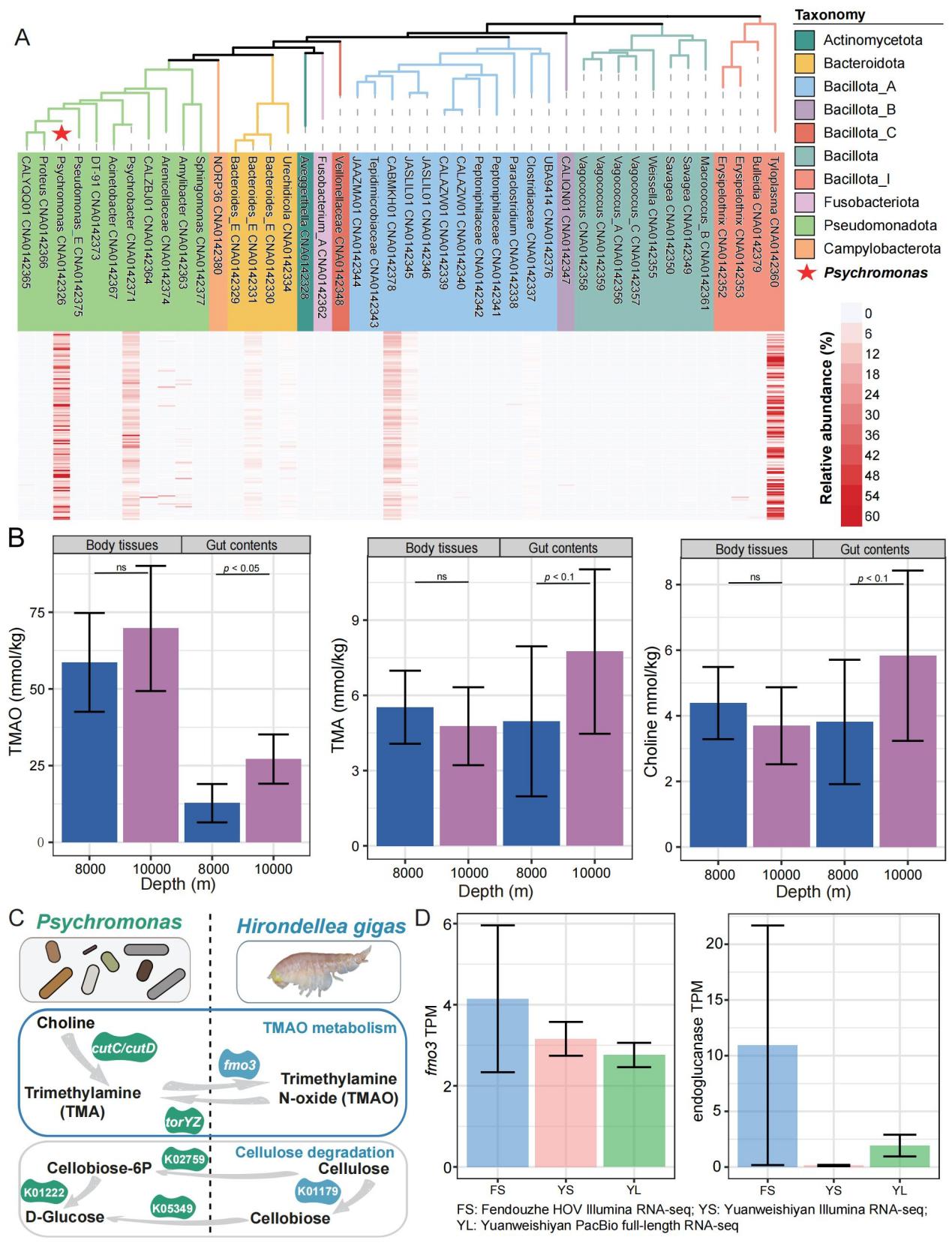
Trimethylamine N-oxide (TMAO), a known osmolyte, stabilizes proteins under high hydrostatic pressure. By using UPLC-MS/MS analysis, increasing concentrations of TMAO were detected in H. gigas at increasing depths. Metagenomic analysis identified the bacterium Psychomonas as a dominant symbiotic bacterium associated with H. gigas. Genomic analyses showed that the genome of the amphipod H. gigas encodes the fmo3 gene, enabling conversion of trimethylamine (TMA) to TMAO, while the symbiotic bacterium Psychomonas carries the torYZ operon, involved in the reduction of TMAO to TMA, regulating TMAO concentration within host cells. Therefore, this metabolic interplay likely regulates osmotic balance in response to the pressure stress.
In addition, low productivity and food limitation are considered to be crucial determinants of deep-sea organismal metabolism. H. gigas has been hypothesized to possess the ability to digest wooden debris. The study revealed a complementary cellulose degradation pathway: H. gigas genome encodes four endoglucanase genes to convert cellulose into cellobiose, while the symbiotic Psychomonas provides enzymes converting cellobiose to glucose. This pathway completes the conversion of wooden debris into glucose, enabling amphipods to exploit food resources and thus enhancing their survival in the food-limited hadal environment.
Conclusion
Understanding adaptation to the least studied hadal environment remains challenging. By integrating genomics, transcriptomics, metagenomics and metabolomics, the study not only provide unprecedented insights into how life adapt to the most extreme oceanic conditions but also enrich our understanding of deep-sea biodiversity and adaptation in the context of global environmental change.
Citation:
Zhang H, et al. (2025) The amphipod genome reveals population dynamics and adaptations to hadal environment. Cell 188(5):1378-1392.
 Copyright © Institute of Deep-sea Science and Engineering,CAS

